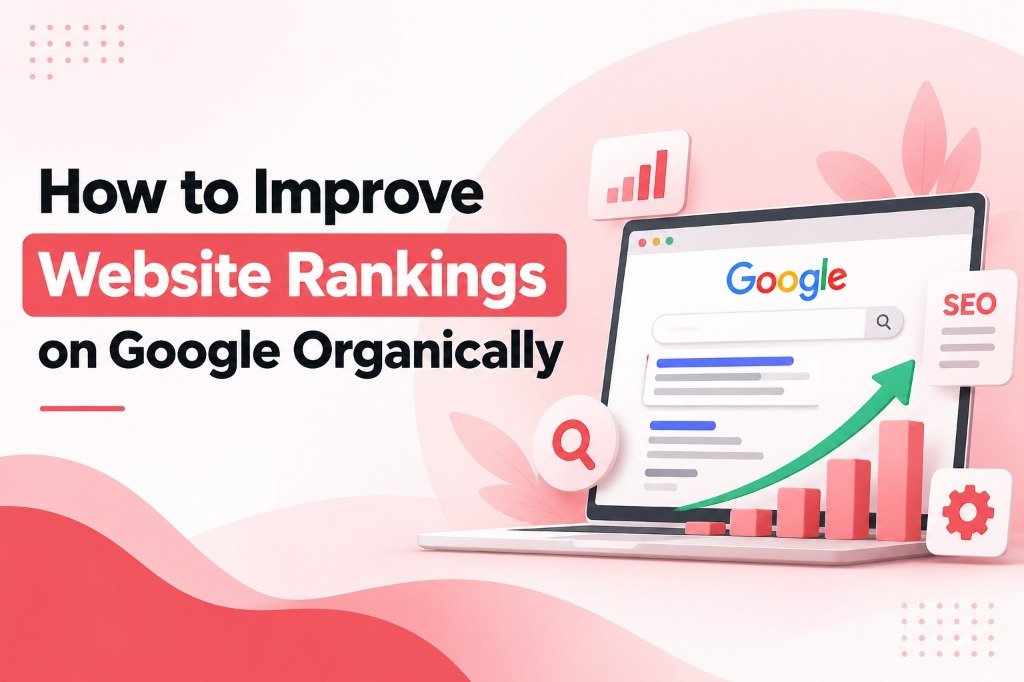
A website can have great products, useful services, and a good design, but still struggle to get visitors from Google. The reason may be poor SEO, weak content, technical problems, or a lack of useful information for the people searching online.
The good news is that you can improve your website's visibility without paying for every click. Organic SEO helps your website appear in unpaid search results by making its pages useful, easy to understand, and accessible to search engines.
If you want to learn these skills, a digital marketing course in Delhi can help you understand how keyword research, content writing, website optimization, and analytics work together. Let's explore the practical steps you can take to improve your website rankings on Google organically.
In This Complete Guide
Understand What Your Audience Is Searching For
Before you write content or change your website, understand what people want to find. This process is called keyword research.
Keywords are the words and phrases people type into Google when they need information, products, or services. For example, someone looking for digital marketing classes in West Delhi may search for:
Choose keywords that match your page and what your audience wants to know. A blog should answer informational questions, while a course landing page should clearly outline curriculum, fees, batches, and help visitors decide whether it suits their goals.
Create Helpful and Original Content
Good content gives people a clear, immediate answer to their questions. It must be easy to read, factually accurate, and practical.
For example, when writing about improving rankings, explain how to discover keywords, optimize page titles, fix technical crawl barriers, and measure real results. Include simple examples so beginners understand what to do next.
Core Content Best Practices:
- Answer the main question near the beginning: Don't make visitors scroll through paragraphs of fluff.
- Use clear headings and short paragraphs: Maintain high readability with whitespace.
- Add examples, actionable steps, or checklists: Make advice immediately executable.
- Update old information: Outdated advice hurts user trust and ranking signals.
- Avoid duplicate content: Never copy content from other sites or create repetitive thin pages for tiny keyword permutations.
Google's Search algorithms actively reward helpful, reliable, people-first content designed for human beings rather than search engine crawler manipulation.
Improve Your Page Titles and Headings
Your page title and heading tags are primary signposts that inform both human readers and search crawlers what your page delivers.
- Unique Title Tag: Write an attractive, accurate title (e.g., How to Improve Website Rankings on Google Organically). Keep it under 60 characters.
- Single H1 Heading: Reserve the H1 tag for the primary topic of the page.
- Structured H2 & H3 Subheadings: Organize subsections logically (Keyword research, on-page SEO, technical SEO, backlinks).
- Natural Keyword Placement: Include phrases like digital marketing course in Delhi where they make contextual sense without awkward repetition.
- Engaging Meta Description: Summarize what readers will learn in 150-160 characters to maximize search click-through rate (CTR).
Make Your Website Easy to Use (Page Experience & UX)
Visitors should find what they need in seconds. If a site is slow, cluttered, or difficult to navigate on mobile, visitors will immediately bounce back to Google results.
Mobile Responsive Design
Ensure menus, buttons, forms, and fonts scale perfectly on smartphones and tablets.
Fast Loading Speeds
Compress oversized images, leverage browser caching, and defer unnecessary script execution.
HTTPS Security
Protect user interactions with an active SSL certificate. Google treats HTTPS as a fundamental trust metric.
Core Web Vitals
Audit loading speed (LCP), interaction responsiveness (INP), and visual stability (CLS).
Fix Technical SEO Problems
Technical SEO ensures that search engines can easily discover, crawl, render, and index your website pages without hitches.
Your primary free tool for this is Google Search Console (GSC). Follow these actionable checklist checks:
- Verify Indexing Status: Ensure your key course, about, and blog pages are successfully indexed.
- Resolve Crawl Errors: Inspect 404 dead links, server timeouts, and redirect chains.
- Submit XML Sitemap: Maintain an updated XML sitemap (such as sitemap.xml) to guide search bots.
- Audit Robots.txt & No-Index Tags: Make sure high-value pages aren't accidentally blocked by a
disallowrule ornoindexmeta tag. - URL Inspection Tool: When a newly published page doesn't appear in search, use the URL inspection tool to test live rendering and request indexing.
Use Internal Links to Connect Your Pages
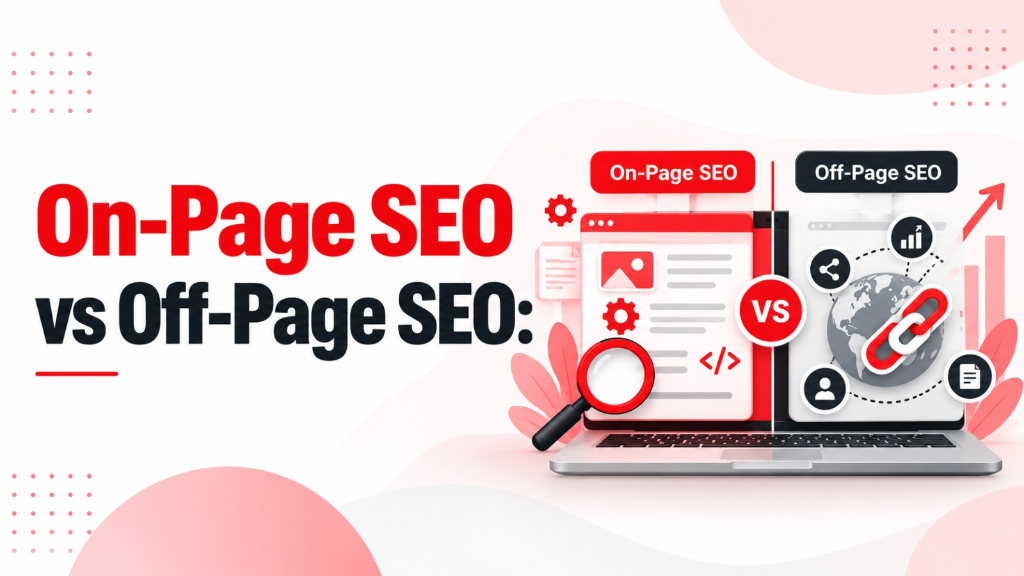
Internal links connect pages on the same website. For instance, this organic ranking guide can link to our On-Page vs Off-Page SEO guide, which in turn links directly to our Master in Digital Marketing course page.
Internal links help visitors explore relevant resources and pass internal link equity across your domain. Always use descriptive anchor text (e.g., learn the basics of search engine optimization rather than generic words like click here).
Build Trust Through Relevant Backlinks
A backlink is a link from another website to yours. Contextual backlinks from reputable websites act as votes of confidence that strengthen your website's authority.
- Publish Original Research & Guides: Deep, insightful case studies naturally earn backlinks.
- Contribute Guest Insights: Share marketing expertise on credible educational and marketing platforms.
- Avoid Black-Hat Tactics: Never buy links in bulk, participate in private blog networks (PBNs), or spam low-quality directories. These directly violate Google's spam policies and risk penalties.
Improve Local SEO for Delhi
If you run a business or institute in West Delhi, local SEO can help nearby searchers discover your services. For example, aspiring digital marketers in Uttam Nagar, Janakpuri, Vikaspuri, and Tilak Nagar frequently search for institutes close to their home or workplace.
Actionable Local SEO Checklist:
AGDM Academy's campus is conveniently located at Pankha Road, opposite Palazzo Inn, Uttam Nagar, New Delhi (easily accessible via Uttam Nagar East and West metro stations).
Measure Your Results and Improve Your Strategy
SEO is an ongoing cycle. As Google updates ranking algorithms and competitors refresh their content, you must monitor four key metrics inside Google Search Console:
Impressions
How often your pages appear in Google search results.
Clicks
How many times users clicked through to your website.
CTR
The percentage of impressions that generated clicks.
Avg. Position
Your page's average ranking position for target queries.
If a page has high impressions but low CTR, revise its title tag and meta description to be more enticing. If visitors land on a page but leave quickly, expand the content with clearer answers, visuals, and practical examples.
Learn SEO Through Practical Digital Marketing Training
Reading theoretical SEO guides is a great starting point, but applying these tactics on a live website is where true mastery happens.
A structured digital marketing course in Delhi teaches you keyword mapping, on-page optimization, technical SEO audits, backlink strategies, and real-time Search Console analysis.
At AGDM Academy, students explore programs like the Master in Digital Marketing (MIDM) and Professional in Digital Marketing (PIDM), covering SEO, Google Ads, Meta Ads, and AI-powered workflow automation with 100% placement support.
Frequently Asked Questions
Ready to Rank #1 on Google Organically?
Learn hands-on SEO audits, keyword research, link-building strategies, and performance analytics with live project training at AGDM Academy.